What Actually Happens in Your First Pickleball Game
The awkward parts nobody warns you about, and why they pass fast.

You read my beginner guide, you sent the message, you bought a towel. Good. Now here is what nobody tells you about the actual first hour, the part between walking in and walking out feeling like a different person. I have watched enough newcomers go through this exact sequence that I can practically set a timer to it.
Minute zero, the walk in
You will stand at the edge of the court for a full thirty seconds too long, scanning for who to talk to. Every court has this moment for every new player, so do not read anything into it. Walk to whoever looks like they are running the sign up board or the app queue and say you are new. That single sentence does more work than any amount of confident body language.
Minutes five to fifteen, watching before playing
Most venues will not throw you straight into a game. You will watch one or two rounds finish while your name moves up the queue. Use this time. Watch where players stand after the serve, notice how fast they retreat toward the kitchen line once the ball crosses over, and listen for how they call the score. This is not wasted time, it is the fastest tutorial you will get all day, faster than any video.
Count how many times the ball bounces before someone hits it. That single habit, noticing the double bounce rule in action, will save you from your first three faults.
The first serve, and why it will probably go long
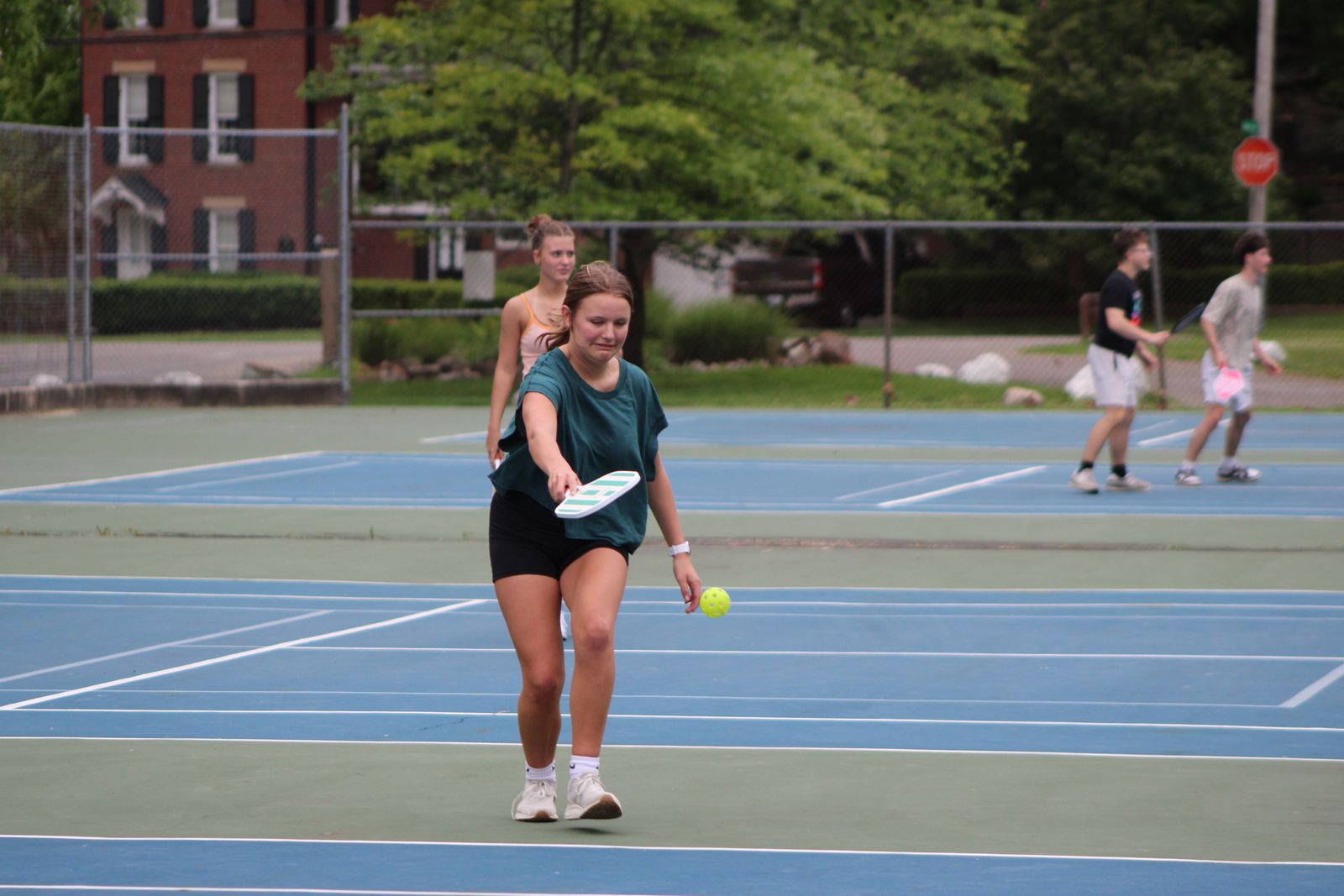
Your first serve almost certainly sails past the baseline. This is not a skill problem, it is an adrenaline problem. Your body is amped up in a way it was not during warmup, and that extra jolt sends the ball further than you meant. Nobody on that court is judging you for it, because it happened to every single one of them once. Take a breath, dial it back thirty percent, and the second serve usually lands clean.
The score call that trips up every beginner
Pickleball scoring calls three numbers before every serve in doubles: your team's score, the other team's score, then whether you are the first or second server. Something like "4, 2, 1." It sounds like a lot to track while you are still learning where to stand, and for your first game it genuinely is. Let your partner or an opponent call it for you the first few rallies. Everyone expects this. By your second game you will be calling it yourself without thinking, and it stops feeling like math the moment it becomes muscle memory instead of a calculation.
The middle of the game, where it gets fun
Somewhere around your fourth or fifth rally, something clicks. You stop thinking about the rules and start reacting to the ball. This is the actual moment people get hooked, not the winning, just the flow of a decent rally where you and your partner move together without talking about it. It usually happens faster than beginners expect, often within the first game, not the fifth one.
The mistakes that actually matter, versus the ones that do not
You will fault the kitchen line, hit a ball out of bounds, and lose track of the score at least once. None of that matters. What does matter is safety awareness, staying alert to balls flying in from the next court over, and calling your own faults honestly even when nobody saw them. Beginners who nail that second part earn trust from regulars far faster than beginners who nail their forehand. The USA Pickleball rulebook covers the technical calls in detail if you want to study later, but honestly the honor system culture matters more day to day than the fine print.
You will hear someone shout "sige lang!" ("keep going!") after you shank a shot. Take it as encouragement, not sarcasm. That is just how the courts here cheer each other on.
What your partner and opponents are actually thinking
Here is the part that surprises new players most. Nobody out there is silently grading your first game. Regulars are usually just glad to have a fourth for doubles, and most will actively coach you between points if you seem receptive, pointing out where to stand or when to poach a shot. The paranoia that everyone is annoyed at your mistakes is almost always louder in your own head than it is on the actual court. Watch a regular's face after your shank. Nine times out of ten it is neutral or encouraging, not irritated.
Walking out, and why you will already be planning game two
Most first timers leave sweaty, a little sore in places they did not expect, and already texting a friend to come next time. That reaction is common enough that it is basically the norm rather than the exception. If your body feels unusually beat up the next morning, that is expected too and worth reading about before you panic over it. Book your next round through CourtPal while the motivation is still fresh, because that window closes fast once the week gets busy again.
Loved game one? Lock in your next open play session on CourtPal before the week eats your motivation.